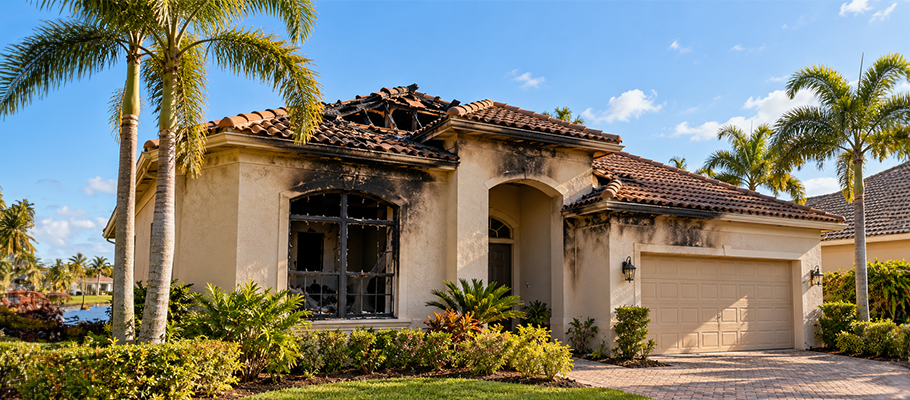
You can sell a fire damaged house in Florida three ways: as-is to a cash buyer, after repairs on the open market, or for the land value. The best path depends on how severe the damage is, whether your insurance claim is open, and what your lender requires. Make the house safe and document everything first.
A house fire can leave more than physical damage behind. There may be belongings to sort through, insurance calls to make, difficult decisions ahead, and the emotional weight of seeing a place that once felt safe suddenly changed.
You can take this one step at a time. Start with what you know: how much damage there is, where things stand with insurance, and what choices you have for the property. From there, you can decide what makes the most sense for you.
If you need to sell a fire damaged house, there are still several paths you can take. At Lincoln Madison Investments (LMI), we bring more than 15 years of experience to buying distressed houses as-is for cash, including homes damaged by fire, humidity, and hurricanes. We buy in Polk County only, from Lakeland to Lake Wales to Winter Haven, and you can see all the areas we serve.
In this guide, we’ll walk you through what to do first, what Florida expects of you as a seller, and what each path could realistically mean for your wallet. For legal, insurance, or tax questions, please reach out to a professional in those areas. We’re real estate professionals, and we’re here to guide you through the house itself.
Key Takeaways
If you only have a minute, start here.
- Stay out of the house until the fire department says it’s safe, then photograph and inventory everything before you clean or throw anything away.
- Tell your insurer and your lender about the fire early, because both can affect when and how you sell.
- You don’t have to repair a fire damaged house before you sell it, though repairs can make sense if your insurance payout covers them.
- Florida home sellers must disclose known facts that materially affect value and aren’t readily observable to the buyer, and an as-is clause alone doesn’t remove that duty.
- Compare your options by what you’d actually keep, not just the sale price, using your repair estimates, claim status, and carrying costs.
Selling a Fire Damaged House in Florida Overview
Here’s how the three ways to sell a fire damaged house in Florida compare at a glance.
| Option | Work before sale | Who usually buys | Main trade-off |
|---|---|---|---|
| Sell a fire damaged house as-is | None | Cash buyers and investors, including LMI in Polk County | The offer reflects the repair work the buyer takes on |
| Repair a fire damaged house, then list | Repairs, with permits | Traditional buyers | Repair costs up front, plus carrying costs until closing |
| Sell the land only | Demolition (permit required) or teardown-lot sale | Builders, land buyers, and cash land buyers such as LMI | Priced on the land, and demolition adds cost |
How Do You Sell a House After a Fire? Your First Steps (Before You Decide Anything)
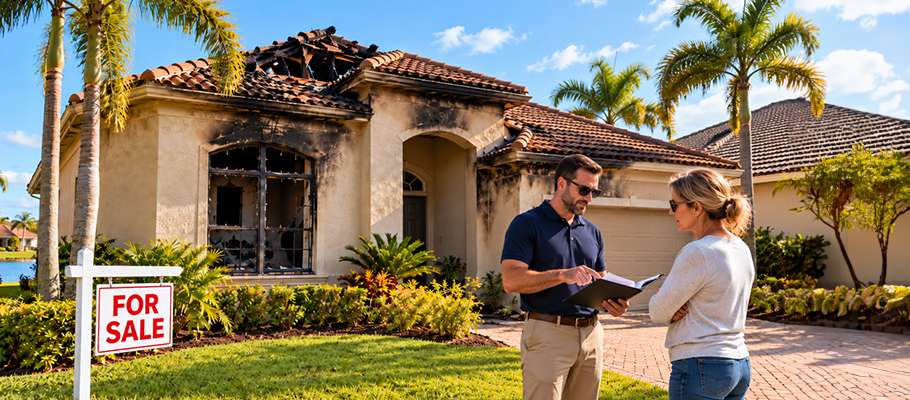
Selling a house after a fire starts with safety and paperwork, not offers. Work through five steps in order, and you’ll know exactly where you stand before you talk to a single buyer. Here they are, in the order our agents recommend.
- Stay out until the fire department says the property is safe to enter.
- Contact your insurance company and, if you have a mortgage, your lender.
- Document the damage with photos and video before cleanup or repairs begin.
- Get a copy of the fire department or fire marshal report when available.
- Get a professional damage assessment if you’re considering repairs.
Let’s go over them one at a time.
Safety
Safety comes first, before paperwork and before any offers. The U.S. Fire Administration, part of FEMA, says not to enter the damaged site until the fire department says it’s safe. Fires can rekindle from hidden, smoldering remains, and roofs and floors may be weakened. There’s a lot to deal with after a house fire, and you don’t have to sort through everything at once.
Ask who is investigating the fire, and whether the site has been released, before you go in or clean anything. Your local fire department looks into how it started, and sometimes the Florida State Fire Marshal’s office steps in.
Until it’s safe, hold off on a few things:
- Don’t turn on appliances that got wet, and have a professional check the electricity, plumbing, and air conditioning first.
- Don’t eat or drink anything the fire exposed, or take medications that were near it.
- Keep pets out until the fire department gives the all-clear, and make sure gas valves are shut off.
If you leave the home empty, tell your local police, and ask your city how to secure it. Some cities, such as Orlando, require boarding up.
Never reconnect utilities yourself. Wait until the fire department, utility company, or a licensed professional says it is safe to do so.
Call Your Insurance Company and Your Lender
Call your insurance company as soon as you can. Under Section 627.70132 of the Florida Statutes, notice of a new property claim is generally due within one year of the date of loss, and your policy may set its own terms. Don’t wait that long. Ask what happens next, and discuss repair plans with your insurer before you hire anyone, as the U.S. Fire Administration advises.
Then call your mortgage lender. Ask how it handles insurance payments and whether your payment schedule changes, and get the answers in writing.
No insurance, or no mortgage?
You can still sell. Insurance isn’t required to sell a house, and with no mortgage there’s no lender to notify. The U.S. Fire Administration points uninsured owners to the Red Cross, the Salvation Army, and local emergency services offices.
| Organization | How they may help | Website and phone |
|---|---|---|
| American Red Cross | Free help after a home fire, including emergency financial assistance and mental health support | redcross.org/homefires, 1-800-733-2767 |
| The Salvation Army of Florida | Emergency financial assistance, food, and disaster services, which vary by location | salvationarmyflorida.org, 1-800-SAL-ARMY |
| Florida 2-1-1 Network | A free, confidential line that connects you with local help | Dial 2-1-1 or text your ZIP code to 898-211 |
FEMA helps only after a presidentially declared disaster, which an ordinary house fire usually isn’t (disasterassistance.gov, 1-800-621-3362). Florida Housing Search lists affordable rentals (floridahousingsearch.org, 1-877-428-8844). Call ahead, since hours can change.
Documentation
Good records are one of the most helpful things you can have after a fire. Once belongings are cleaned up or thrown away, there’s no way to show what was there. Photos, lists, and receipts can help your insurance claim and, later, your sale. Once you have the all-clear:
- Take photos and video of every room before you touch or clean anything.
- Make an inventory of damaged items before you throw any of them out.
- Save every receipt for hotels, meals, and emergency costs. Your insurer may need them, and they may matter for taxes, so ask a CPA.
- Keep insurance policy numbers, IDs, and important papers together in one place.
Fire Report
When the report is available, ask for a copy. In most localities, it’s a public record, and you can request it from the fire department or fire marshal’s office. It records what the fire department found, which can help with your insurance claim. Write down the fire’s date, time, location, incident number, and the investigator’s name.
Get a Professional Damage Assessment
Ask a licensed contractor or restoration company to put the damage in writing. The report should spell out what was burned, where smoke or water caused damage, and what the repairs may cost.
That is different from an appraisal. An appraisal estimates what the home is worth. Depending on your situation, you may need both.
Can’t get one right now? That’s okay. You don’t need an assessment to sell a fire damaged house as-is, since a cash buyer evaluates the property itself. If you’re weighing repairs, Florida’s DBPR advises getting written estimates from more than one licensed contractor and checking each license at MyFloridaLicense.com before you sign. Check with your insurer that the work is covered.
We buy houses as-is, so you’ll never need repair quotes from us. We also believe in checking credentials, ours included: our broker’s Florida real estate license, BK3180248, is listed on the DBPR license search.
Can You Sell a Fire Damaged House in Florida?
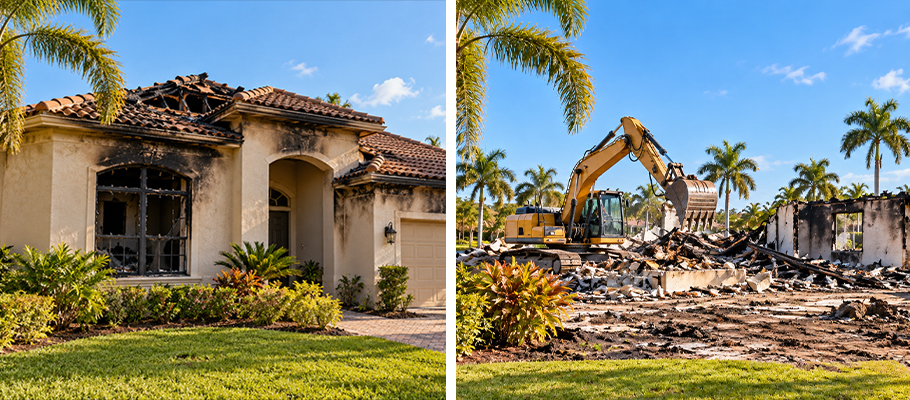
Yes, you can sell a fire damaged house in Florida, and you don’t have to repair it first. What can limit you is an open insurance claim, your lender, or a city or county order on the structure. Check all three before you sign a contract.
The third is the easiest to overlook, so let’s start there.
Can a Fire Damaged House Be Condemned?
Yes. Local officials can declare a fire damaged house unsafe and require the owner to repair it, secure it, or take it down. It doesn’t happen after every fire. It depends on how badly the structure is damaged and whether the property sits open and unsecured.
Section 116 of the Florida Building Code says unsafe structures must be made safe or taken down, as the building official decides, and a vacant structure left unsecured counts as unsafe. The code applies statewide, but each county and city runs its own enforcement, so the details here come from Polk County, where we buy. If your home is elsewhere in Florida, ask your local building department how it works there.
In unincorporated Polk County, unresolved code cases can end up before a special magistrate. Property owners are usually given time to fix the problem, but the county may move faster if the home poses a serious safety risk.
If you receive a notice, read it carefully and pay close attention to the deadlines. The next steps can vary by case, so call the office listed on the notice if anything is unclear.
Got a notice? We buy homes with code violations and can explain your choices. Call 863-521-0549 or fill out a contact form.
What Is Considered Fire Damage?
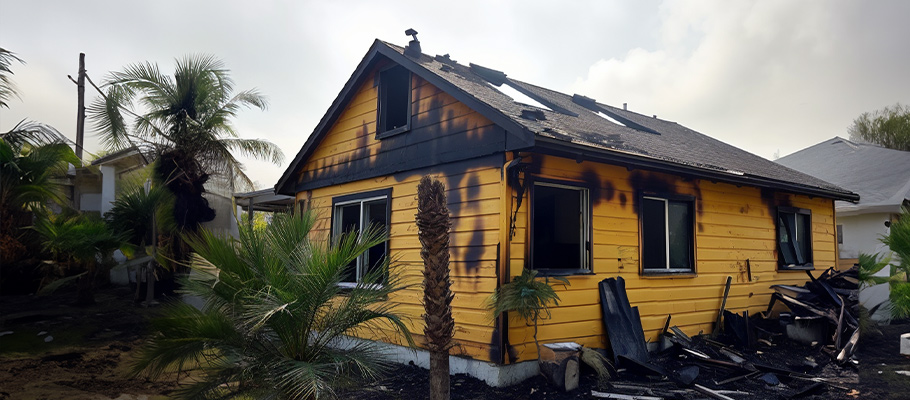
Fire damage is any harm to a home from flames, heat, smoke, soot, odor, or the water and other firefighting efforts that put the fire out. It shows up as burned structure, scorched surfaces, smoke and soot residue, and soaked materials. A house can be fire damaged even if only one room actually burned.
Structural damage: burned or weakened framing, roof, and floors.
Surface damage: charred, melted, or peeling walls, cabinets, and belongings.
Smoke and soot damage: residue and odor that can settle in rooms the flames never reached.
Water and firefighting damage: soaked materials, plus broken windows and holes cut in the roof or walls so firefighters can vent smoke and confirm the fire is out.
An industry standard, ANSI/IICRC S700, covers professional fire and smoke damage restoration, including building systems such as heating and cooling, and the damaged contents inside the home.
Primary Damage vs. Secondary Damage
Primary damage is what the flames and heat destroy directly, and it’s usually fixed by rebuilding or replacing. Secondary damage is what follows once the flames are out: smoke, soot, odor, and water. It’s mostly fixed by cleaning, drying, and deodorizing, and water left sitting can lead to mold.
Affected, Minor, Major, and Destroyed: What Each Means When Selling
FEMA and the Florida Division of Emergency Management use four categories to describe residential damage: Affected, Minor, Major, and Destroyed. These categories were created for disaster assessments, not home sales, but they can give you a simple way to think about how much work the property may need.
One thing to know: FEMA’s “Minor” category can still mean the home isn’t currently livable.
| FEMA category | What it means | Selling considerations |
|---|---|---|
| Affected | Some damage, but the home remains livable. | Repairing before listing may be practical if cost and time are manageable. An as-is sale is another option. |
| Minor | The home is damaged and not livable right now, but repairs can generally make it livable again. | Compare repair costs and expected sale value with an as-is offer. |
| Major | Substantial damage, which may involve structural components or extensive repairs. | Get repair estimates before committing, and compare repairing and listing with selling as-is. |
| Destroyed | A total loss, or damage severe enough that rebuilding may be necessary. | Compare rebuilding, selling as-is, and selling based on the land value. |
These categories are only a starting point. Your repair estimates, insurance coverage, lender requirements, and the value of the property will matter more when you’re deciding whether to repair or sell as-is.
A category can’t capture what this home meant to you. It only describes the condition of the building, and it doesn’t limit what you can do next. You may still be able to sell the property, and you don’t have to figure it out alone. Not sure which category yours falls into? Tell us about your fire damaged house, and we’ll walk you through your options, with no obligation.
How to Sell a Fire Damaged Home: Your Options
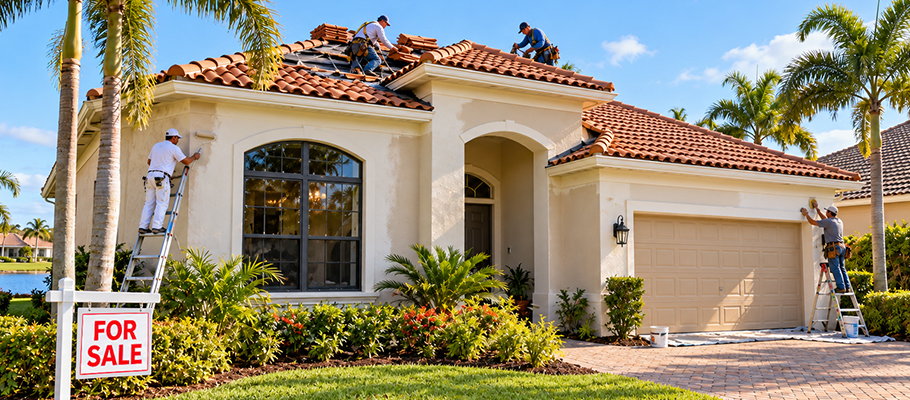
Once you know the condition of the property, you can start comparing what to do with it. Most homeowners have three main paths:
- Repair the house, then list it.
- Sell the house as-is.
- Tear it down and sell the land.
Let’s look at what each option involves, so you can make an informed decision about what works best for your situation.
1. Repair, Then List
Repairing first can recover more value when the damage is limited and your insurance payout covers the work. The steps are to get written estimates, pull permits, hire licensed contractors, finish the repairs, and then list. Which office issues your permits depends on whether your home is in unincorporated county or inside a city. The trade-off is time: you keep paying the mortgage, taxes, and insurance on a home you can’t sell yet.
How Much Does It Cost to Repair or Rebuild a Fire Damaged House?
The cost to repair a fire damaged home can vary widely based on the home’s location, size, construction, and the extent of the damage. Angi’s 2026 data puts the average fire damage restoration cost in Florida at about $64,900. That’s a statewide average, not a quote for your home, and the actual cost can be much lower or much higher depending on how much of the house was affected, whether there is structural damage, and how much smoke, soot, and water cleanup is needed.
An estimate may include smoke and soot cleanup, water removal and drying, odor removal, damaged drywall, flooring, and cabinets, electrical and plumbing repairs, roof and structural work, debris removal, and permits and inspections. Your insurer’s estimate is one starting point, and estimates from licensed contractors give you another. If they’re far apart, ask each one to explain what’s included and what’s left out.
When Repairs Cost More Than the House Is Worth
Before you commit to major repairs, ask one simple question: will the home be worth enough after the work to justify what you’re about to spend? Written repair estimates will help you answer that before you put more money into the property.
For example, in a mapped flood zone, Polk County says damage or improvements reaching 50 percent or more of a structure’s market value may require it to meet current floodplain rules, which can add high costs. Check with the county’s floodplain office before approving a major repair plan.
2. Sell As-Is
If you want to compare as-is offers, gather a few details first. Buyers will usually want to know:
- Who owns the home, and whether anyone else has to sign
- Where your insurance claim stands, including your claim number
- What you still owe on the mortgage, which your lender can tell you
- What the fire department found, if the report is ready
- Whether any city or county notices have been issued
Having these details in one place makes it easier for a buyer to evaluate the property and give you a clear offer.
Not sure whether an as-is sale fits your situation? At LMI, we buy houses as-is for cash, and one of our agents can talk through your options with you. Call 863-521-0549 or fill out a contact form seven days a week, with no obligation.
3. Tear It Down and Sell the Land
A home holds more than its walls, and the land it sits on still has value. If the house can’t be repaired, some owners have the structure removed and sell the land, and others sell the property as it stands to a buyer who plans to rebuild. Buyers in either case are looking at the land, so offers are based on its value, which can be different from what your home was worth before the fire. Removing a structure needs a permit from the county or your city, depending on where the home sits.
There’s no need to decide right away. When you’re ready, it can help to find out what the lot might sell for and what removal would cost. If selling the land feels like the right fit, we also buy vacant land in Polk County, and we’d be glad to talk it through with you.
Selling Fire Damaged Property: Rentals, Inherited Homes, and Mobile Homes
A fire can make an already complicated property situation feel even harder. If the home is a rental, inherited property, or mobile home, there may be a few extra steps to work through before you sell.
Rentals
Under Florida law, a tenant may be able to end the lease and move out if a fire substantially impairs the home, and the landlord doesn’t get the same right. You’ll also need to handle the security deposit and any advance rent as the law requires.
Inherited homes
A court-appointed personal representative usually handles the sale during probate, and Florida’s homestead rules can affect who inherits. See how we help with inherited and probate properties.
Mobile homes
In Florida, a mobile home may be personal property with its own title, or real property if the title has been retired and the home is tied to the land, which changes how a sale works. If yours sits on land in Polk County, see how we buy mobile homes on land in Polk County.
If your situation doesn’t fit neatly, that’s common. A Florida real estate or probate attorney can help you confirm what to do.
Who Buys Fire Damaged Homes?
Cash buyers and investors, traditional buyers who use renovation loans, and contractors and land buyers all buy fire damaged homes. Which one fits depends on how much damage there is, how fast you need to close, and whether the buyer needs a mortgage.
Cash Buyers and Investors
Fire cash buyers are investors who buy damaged homes as-is, with their own funds. There’s no mortgage approval to wait on and no repairs for you to make, and the offer reflects what it will take to restore and resell the home. Not every cash buyer works the same way, so ask who the actual buyer is and where your deposit will be held, and get every term in writing. Our article on finding a reputable cash buying company walks through what to look for.
Traditional Buyers and Renovation Loans
Some traditional buyers use a renovation loan, which rolls the purchase price and the repair costs into one mortgage. Two common types are the FHA 203(k), insured by the Federal Housing Administration, and the HomeStyle loan from Fannie Mae, a government-chartered company that buys mortgages from lenders. The Standard 203(k) is built for homes that need structural repairs. Not every lender offers renovation loans, and lender requirements vary, so ask before assuming a buyer can finance a fire damaged home this way.
Contractors and Land Buyers
Contractors and builders may be interested in a fire-damaged home if they see potential to repair or rebuild it. If the structure is badly damaged, some buyers may be more interested in the land itself.
Their offer will usually factor in the cost of the work and what they believe the property could be worth once the project is finished.
How to Price a Fire Damaged House
To price a fire damaged house, estimate what it was worth before the fire, subtract expected repair costs, and compare that result with the value of the land. Buyers may also discount for hidden damage, financing limits, and the time and risk involved in completing repairs.
Does a House Lose Value After a Fire?
Yes. Fire damage usually lowers a home’s market value because buyers take on extra repairs, uncertainty, and time before the property can be fully used or resold. The amount of value lost depends on the severity of the damage and whether the home can be restored.
Here’s what tends to affect the value most:
How much of the structure is affected. Damage to framing, the roof, or the foundation usually matters more than surface damage.
Whether repairs are permitted and documented. Buyers may want proof that major work was done properly.
Lingering odor or moisture. These can make buyers cautious about problems they can’t see.
The drop in value can look very different from one property to another, so a fixed percentage would be misleading.
Start With Pre-Fire Value
Your starting point is what the home would have sold for before the fire. A local agent or an appraiser can estimate it from recent sales of similar homes nearby. Your county property appraiser’s parcel page also lists the home’s value, which is a useful reference, though it’s a tax estimate and not a sale price.
Subtract Repair Costs and Find the Land Value Floor
Next, take away what repairs would cost, and look at the land. The land is your floor: even if the house can’t be saved, the lot still has value.
| Step | What to find | Where to look |
|---|---|---|
| Value if repaired | What the home would sell for once fully repaired | A local agent or appraiser |
| Repair or rebuild cost | The full cost, including permits | Written estimates from licensed contractors, plus your insurer’s estimate |
| Land value floor | What the cleared lot would sell for, minus removal and permit costs | Recent vacant lot sales nearby |
| Your net | Value if repaired, minus repairs and carrying costs | Your own numbers from the steps above |
To see how the numbers can play out, imagine your home could sell for $300,000 once repaired. If repairs cost $110,000 and carrying costs add another $12,000, you’d be left with $178,000 before commissions and closing costs. If a cash buyer offered $150,000 as-is, the difference would be $28,000. You’d then have to decide whether that extra amount is worth the months of repairs, possible surprises, and longer wait to sell.
How Your Insurance Payout Fits In
Your insurance payout and a buyer’s price are two different pieces of money. Depending on your policy, your insurer may pay the depreciated, actual cash value first and release the rest as repairs are completed. Ask your insurer what yours will cover, and bring that number into the comparison. Florida’s Department of Financial Services runs a free helpline at 1-877-693-5236.
Sell Fire Damaged House Fast: What a Cash Sale Looks Like
A cash sale usually has fewer financing steps than a traditional sale, but the exact timeline still depends on the property, title, insurance claim, and lender. Here’s what the process can look like with LMI.
Cash Sale Timeline From First Call to Closing
Timing depends on the home, your claim, and who needs to sign. Here’s the general shape of a cash sale with us:
| Stage | Typical timing | What can add time |
|---|---|---|
| Cash offer | Usually within 24 hours of your request | Needing to see the home, or unclear ownership |
| Closing | As little as 7 days, or later if you need more time | An open insurance claim, your lender, probate, title questions, or a city or county order |
Those timing figures are for our cash sales in general.
Do You Have to Disclose Fire Damage When Selling a House in Florida?
Yes, if you know about it and it affects the home’s value in ways a buyer can’t easily see. Florida law requires home sellers to disclose those known facts. Fire damage can fall into that category, including damage you’ve already repaired, so ask a Florida attorney how it applies to your home.
Does “As-Is” Cancel Your Duty to Disclose?
No. An as-is clause alone doesn’t remove your duty to disclose known hidden problems. A Florida appellate court held that sellers who sold a house “as is” still had to disclose what they knew about its condition. Selling as-is changes who pays for repairs, not what you’re honest about.
Before you sell, think about questions like:
- Are there problems a buyer may not notice during a normal walk-through?
- Did the fire lead to repairs that changed the structure, electrical system, roof, or other major parts of the home?
- Are there unfinished repairs, open permits, or code issues?
If you’re unsure what to disclose, ask a Florida real estate attorney. If you’re considering an as-is cash sale, you can also ask us what information we typically need before making an offer.
Records to Keep
After a fire, it is easy for paperwork to get scattered. Keep the important documents together so you are not searching for them every time a buyer, contractor, insurer, or title company asks a question.
Good records can help you:
- Show what was repaired and when the work was done
- Confirm whether permits and inspections were completed
- Compare insurance estimates with contractor quotes
- Keep track of warranties that may still apply
You don’t need to hand over every document right away. Just be ready to share what’s relevant when a buyer asks.
Selling a Home With Fire Damage: Insurance, Your Lender, and Your Claim
You may be able to sell a fire damaged home while an insurance claim is open or after it has been settled. How the insurance money is handled depends on your policy, whether a lender has an interest in the proceeds, and what your sale contract says. Check all three before you sign anything.
Selling While a Claim Is Open
You may still be able to sell the house as-is while your insurance claim is open. The important thing is to find out what happens to the claim and any insurance money before you sign a sale contract.
Start by asking your insurer:
- Whether selling the property affects your open claim
- What payments have already been made
- Whether more payments are expected
- What happens to those payments if the house is sold
If you have a mortgage, ask your lender too. Your lender may have an interest in the insurance proceeds.
Then make sure your sale contract clearly addresses any unfinished repairs and who keeps future insurance payments. If the claim is still open when you’re ready to sell, it’s a good idea to have a Florida real estate attorney review that part of the contract.
Does Insurance Rebuild A Fire-Damaged House?
Yes, homeowners insurance can pay to repair or rebuild a fire-damaged house when the loss is covered by the policy. How much is available depends on your coverage limits, deductible, and whether the claim is paid on a replacement cost or actual cash value basis. Compare the insurer’s estimate with written contractor estimates before deciding whether rebuilding makes financial sense.
Who Gets the Insurance Check
The check usually goes to whoever has a stake in the home. Here’s what to check in each situation:
| Situation | What to check |
|---|---|
| You have a mortgage | Ask your lender how it handles insurance payments and whether it needs to approve or release the funds |
| You don’t have a mortgage | Ask your insurer who will be named on the payment and when funds will be released |
| Your lender is holding the insurance money | Ask what documents, inspections, or repair progress it requires before releasing funds |
| You’re planning to sell | Ask your insurer and lender how closing will affect any remaining insurance payments, and make sure your contract addresses them |
Permits, Building Code, and Taxes
Fire repairs and demolition may require permits, depending on the work and where the property is located. Check with your county’s Building Division or your city’s building department before structural, electrical, plumbing, roofing, or demolition work begins.
A fire can also create tax questions, particularly if you receive insurance money, sell the property, or have a casualty loss. IRS Publication 547 explains the federal rules for casualties and insurance reimbursements, but what applies depends on how you used the property and the circumstances of the loss. A CPA can help you understand how those rules apply to your situation.
Smoke, Soot, Water, and Mold: What Buyers and Lenders Look For
Buyers and inspectors look past what’s visible. They check for soot residue and lingering smoke odor, moisture left by firefighting water, mold, and damage to the electrical, plumbing, and air conditioning systems, and they’ll want written proof of what was found and fixed.
EPA guidance for clean water damage is to dry wet materials within 24 to 48 hours, and a restoration professional should look at firefighting water, which may carry soot. Mold can return unless the moisture behind it is fixed. In Florida, mold assessors and remediators are licensed separately, so check licenses at MyFloridaLicense.com. A buyer who needs a mortgage will also want written reports from licensed professionals.
Your Options for Selling a Fire Damaged House
The right path depends mainly on the home’s condition, repair costs, your insurance situation, and how quickly you want to sell. Before comparing your selling options, make sure any safety, ownership, insurance, or lender issues are clear.
| Your situation | What to consider next |
|---|---|
| The home is unsafe to enter, or you’re not sure who can legally sell it | Get the fire department’s all-clear and confirm who has authority to sign before moving forward |
| Your insurance claim is still open | Ask your insurer how a sale could affect the claim and any remaining payments |
| You still have a mortgage | Ask your lender how insurance proceeds and the mortgage will be handled if you sell |
| Repairs are manageable and may be covered by insurance | Compare the cost and timeline of repairing and listing with what you could receive by selling as-is |
| Repairs are extensive or close to the home’s repaired value | Compare selling as-is with selling based on the land value before putting more money into repairs |
| You need to sell quickly or don’t want to manage repairs | Compare an as-is cash sale with the time and costs involved in repairing and listing |
You may find that more than one option could work. The goal is to compare what each path would require from you, how long it could take, and what you may actually keep after the related costs.
Mistakes to Avoid When Selling a Fire Damaged House
When you’re dealing with a fire, it’s natural to want to move fast. A few common mistakes are worth avoiding:
- Going back inside too soon. Wait for the fire department’s all-clear.
- Throwing things out before documenting them. Photos and inventories help your claim and your sale.
- Signing repair contracts before talking to your insurer. Check what’s covered first.
- Assuming the insurance check is yours alone. Your lender may be named on it.
- Hiding known problems from a buyer. An as-is clause doesn’t remove your duty to disclose.
- Comparing offers by price alone. Look at what you’d actually keep after repairs and costs.
Sell a House After a Fire FAQs
Here are quick answers to common questions about selling a fire damaged house.
Can a buyer get a mortgage on a fire damaged house?
Sometimes. Standard mortgages are built for homes that are ready to live in, so many buyers use renovation loans such as the FHA 203(k) or HomeStyle, which finance the purchase and repairs together. Lenders set their own rules, and some won’t finance fire damage repairs. Cash buyers don’t need a mortgage at all.
What happens to my mortgage after a house fire?
Your mortgage stays in place after a fire, and you’re still responsible for the loan. Your lender is usually named on your insurance policy and may hold the claim payment until repairs are done. Tell it about the fire right away, and ask what payment options and documents it needs.
How long does it take to sell a fire damaged house?
It depends on the path. A cash sale with us can close in as little as 7 days. Repairing and listing takes as long as the repairs, permits, and listing take. An open insurance claim, your lender, probate, title questions, or a city or county order can add time to any path.
Can I keep my insurance payout and still sell as-is?
It depends; selling the property doesn’t necessarily mean giving the insurance proceeds to the buyer, but your policy, mortgage, and sale contract can affect what happens to the money. Ask your insurer and lender before closing, and have an attorney review the contract if the claim is still open.
Does a house fire ruin the foundation?
Not always. Concrete foundations often keep much of their strength, but intense heat can cause cracking and spalling, which is when the surface flakes off. A licensed structural engineer should evaluate the foundation before you decide to repair or reuse it.
Conclusion
After a house fire, the question isn’t only, “What can this property sell for?” It’s also, “How much more time, money, and energy do I want to put into it?”
For some homeowners, rebuilding makes sense. For others, getting estimates only confirms that they’re ready to move on. Either choice can be reasonable.
Give yourself enough information to compare the paths, then choose the one that fits your finances, your timeline, and what you’re ready to take on next.
We Buy Fire Damaged Houses in Polk County
If you decide an as-is sale is right for you, we’d be honored to help. Lincoln Madison Investments is headquartered in Lakeland, with more than 15 years of experience and over $100 million of real estate bought and sold. Our friendly, licensed agents are available seven days a week; we buy fire damaged houses as-is for cash, and asking for an offer is no obligation.
We buy homes in Lakeland, Davenport, Winter Haven, Haines City, and across Polk County only. If your home is elsewhere in Florida, the steps in this guide still apply, but we won’t be able to buy it. When you’re ready, call 863-521-0549 or fill out a contact form, and we’ll talk through your options.
References:
- U.S. Fire Administration, After the Fire! Returning to Normal: https://rmp.nc.gov/LCF/Publications/AL_Resources/Fire/FEMA%20-%20Fire%20Recovery.pdf
- City of Orlando Fire Department, “After the Fire”: https://www.orlando.gov/Our-Government/Departments-Offices/Orlando-Fire-Department/Resources/After-the-Fire
- FEMA and the Florida Division of Emergency Management damage categories: https://fema.gov/sites/default/files/2020-09/PDAReport_FEMA-1840-DR-FL.pdf
- American Red Cross, home fire help: https://www.redcross.org/local/florida/south-florida/about-us/news-and-events/press-releases/red-cross-urges-communities-to-take-steps-now-to-prevent-home-fi.html
- The Salvation Army of Florida: https://salvationarmyflorida.org/
- Florida 2-1-1 Network (Section 408.918, Florida Statutes): https://www.cfbhn.org/wp-content/uploads/2021/12/florida-211-network-988-implementation-in-florida_compressed.pdf
- FEMA, Assistance for Housing and Other Needs: https://www.fema.gov/assistance/individual/housing
- Florida Housing Search: https://www.ncsha.org/hfa-news/florida-housing-unveils-redesigned-affordable-rental-housing-locator/
- Florida Department of Financial Services, Insurance Consumer Helpline: https://www.myfloridacfo.com/division/consumers/contactus
- Florida DBPR, license search and hiring guidance: https://www.myfloridalicense.com/
- Florida Statutes, Section 627.70132, Notice of property insurance claim: https://www.flsenate.gov/laws/statutes/2023/627.70132
- Florida Statutes, Section 627.7152, Assignment agreements: https://www.flsenate.gov/laws/statutes/2021/627.7152
- Fannie Mae Servicing Guide, Insured Loss Events: https://servicing-guide.fanniemae.com/svc/b-5-01/insured-loss-events
- Freddie Mac, Bulletin 2020-29: https://guide.freddiemac.com/app/servicing/bulletin/2020-29
- Cassel and Michael, “Exploring the Application of Actual Cash Value Versus Replacement Cost Value in Florida Property Insurance Claims”: https://www.propertyinsurancecoveragelaw.com/wp-content/uploads/2022/06/Cassel-Michael-Exploring-ACV-v-RCV-in-Florida-Property-Insurance-Claims-Final-1.pdf
- IRS, Publication 547, Casualties, Disasters, and Thefts: https://www.irs.gov/publications/p547
- Bowman v. Barker, 172 So. 3d 1013 (Fla. 1st DCA 2015): https://caselaw.findlaw.com/court/fl-district-court-of-appeal/1712804.html
- Florida REALTORS, rental property questions after a casualty: https://www.floridarealtors.org/news-media/news-articles/2022/10/hurricane-related-questions-about-rental-property
- Florida Senate staff analysis on retiring a mobile home title: https://www.flsenate.gov/Session/Bill/2003/2550/Analyses/20032550SCP_2003s2550.cp.pdf
- HUD, FHA 203(k) program comparison: https://www.hud.gov/sites/dfiles/SFH/documents/MO_203k_Program_Comparison_FS.pdf
- HUD, FHA 203(k) lender fact sheet: https://www.hud.gov/sites/dfiles/SFH/documents/MO_203k_Lender_FS.pdf
- Fannie Mae, HomeStyle Renovation: https://singlefamily.fanniemae.com/originating-underwriting/mortgage-products/homestyle-renovation
- Congressional Research Service, Fannie Mae and Freddie Mac: https://www.everycrsreport.com/reports/RS22950.html
- Polk County Code Enforcement and FAQs: https://www.polkfl.gov/public-safety/code-enforcement/ and https://www.polkfl.gov/public-safety/code-enforcement/faqs/
- Polk County Floodplain Management: https://www.polkfl.gov/public-safety/floodplain-management/am-i-in-a-flood-zone/
- Polk County Property Appraiser, parcel details help: https://www.polkflpa.gov/help/html/ParcelDetails.html
- Angi, “How Much Does Fire Damage Restoration Cost?”: https://www.angi.com/articles/how-much-does-fire-damage-restoration-cost.htm
- U.S. EPA, A Brief Guide to Mold, Moisture, and Your Home: https://www.epa.gov/sites/production/files/2016-10/documents/moldguide12.pdf
- Florida Statutes, Chapter 468, Part XVI (mold-related services), bill text: https://flsenate.gov/Session/Bill/2006/161/BillText/c1/PDF
- Peter Marxhausen, “Evaluating Fire-Damaged Concrete,” Journal of Light Construction: https://www.jlconline.com/how-to/foundations/evaluating-fire-damaged-concrete_o